
By Kelly Harman | Fire & SoulNervous system regulation · Breathwork · Anxiety support · Functional living
There is often a very real reason you find it difficult to switch off, even when you are physically exhausted, even when you know you desperately need rest, even when life looks perfectly fine from the outside. It is not a lack of discipline. It is not that you are somehow bad at relaxing. And it is definitely not a personal failing. More often than not, it is because your nervous system has quietly learned to stay switched on.
I see this all the time in the people I work with. Women who are running on empty but can't stop. People who are bone tired but lie awake at 2am with a brain that won't quieten. High-achievers who know logically that everything is fine, yet feel a persistent hum of tension underneath it all.
Sound familiar?
If it does, I want you to know that this is not you being broken. This is your body doing exactly what it was designed to do. It just hasn't felt safe enough to stop yet.
What Is Fight or Flight, and Why Does It Get Stuck?
When your nervous system perceives a threat - whether that's a looming deadline, a difficult conversation, a long to-do list, or simply the relentless pace of modern life - it activates what's known as the sympathetic nervous system state, or fight or flight.
In this state, your body is primed for action. Your breathing becomes shorter and higher in the chest. Your heart rate increases. Your thoughts quicken and become more problem-focused. Your system begins scanning for what might need your attention next. Over time, if you've been living with chronic stress, pressure, or overwhelm, this can start to feel like your normal.
And here's the thing, this state is not wrong. It is not the enemy. It is a beautifully designed survival mechanism, built to help you respond to pressure, stay alert, and take action when needed. The difficulty arises when the body doesn't feel able to come out of it.
Understanding Your Nervous System States and the goal is important
Your nervous system is constantly moving (or designed to move) between different states, each with its own purpose.
The sympathetic state (fight or flight) supports action, urgency and responsiveness. This is the state that gets things done.
The parasympathetic state or ventral (rest and digest) allows for recovery, connection, creativity and restoration. This is where healing happens.
The parasympathetic or dorsal state (freeze) can occur when the system becomes so overwhelmed that it shuts things down as a form of protection. This can feel like numbness, disconnection, or a strange flatness, even when life is full.
None of these states are problems in themselves. They all have a purpose and a place. The real goal is not to be permanently calm. It is to be able to move fluidly between these states i.e. responding to what life asks of you, and then returning to a more settled baseline once that moment has passed. This flexibility is what a well-regulated nervous system looks like.
Why does modern life make this so hard?
In theory, the nervous system is designed to activate, respond, and then recover. Think of how animals in the wild shake off stress after a threat passes, their bodies literally discharge the activation with a huge shake before returning to baseline. We, however, tend to keep going. Modern life exposes us to a near-constant stream of stimulation, low-level pressure and demands (have you counted how many notifications ping on your phone in an hour? each ping jumps you into fight/flight state) often without the natural pauses, movement or genuine rest that would allow the system to reset. We spend long periods indoors. We move less than our bodies were built for. We are always reachable, always responding, always on to the next thing.
Over time, the nervous system can begin to default to a more activated state.
When this happens, you might notice that even when things are technically "fine", your body doesn't quite believe it. You might find it hard to rest even when you have the chance. Your thoughts continue long after the day has ended. Sleep feels unsettled. Your body carries a tension that never fully drops.
This is often where anxiety begins to build, not just as a pattern of thought, but as a pattern held in the body itself. And this is why simply thinking your way out of it so rarely works.
A Simple Place to Begin: Your Breath
One of the most accessible and powerful ways to begin shifting your nervous system state is through your breath. Not by forcing calm, but by gently signalling to your body that it is safe to begin softening. The reason breath is so powerful is that it is one of the few bodily functions we can consciously control and it has a direct line to the vagus nerve, which plays a central role in helping the body shift from sympathetic activation into a more regulated, settled state.
Here's a simple place to start, the 5-7-8 breath:
Slow your breathing down and extend your exhale.
Inhale slowly through your nose for a count of five.
Hold for Seven.
Exhale slowly through your mouth for a count of eight. As you breathe out, allow your shoulders to soften, your jaw to release, your belly to drop.
Repeat this for two to three minutes.
It might feel subtle at first. It is subtle. But it is also genuinely powerful and the more consistently you use it, the more effectively your nervous system learns to respond. If the hold and exhale are too hard at first, begin with shorter breaths - the key is that the exhale is longer than the inhale.
Regulation Is Not Just a Practice. It Is a Way of Living
Regulation is not only something that happens in moments of crisis or in a breathwork session. It is shaped — quietly, cumulatively, by the way you live day to day. Simple, often overlooked foundations play a significant role in how your nervous system functions:
Getting outside into natural light, particularly in the morning, helps regulate your cortisol rhythm
Moving your body regularly. Not to perform, but to process and discharge
Creating genuine pauses away from screens and stimulation, even briefly
Allowing real rest. Not just stopping, but actually giving your nervous system permission to land
What I have found since practicing a more functional way of living, or at least begining to, is that these are not extras or luxuries. They are the foundations of a regulated life. And when we start treating them as such, everything else becomes a little easier.
Coming Back to You
If you find it hard to switch off, as I did before I had these tools, there is nothing wrong with you. It may simply mean your nervous system has not yet had enough consistent signals of safety to feel able to rest. The body is not being dramatic. It is being protective. And with the right support and understanding, it can learn to respond differently.
This is exactly the work I do at Fire & Soul, not from the outside in, but from the inside out. Supporting your nervous system to feel safe, regulated and free, through breathwork, coaching and sound, so that calm stops being something you chase and starts being something you actually feel.
If this resonates and you would like to explore what working together might look like, I would love to hear from you. You can book a free discovery call, or browse the Fire & Soul offerings below.
Kelly Harman is a trauma-informed breathwork facilitator, positive psychology coach and sound practitioner based in Kent. She works with people living with anxiety, burnout and nervous system dysregulation, in person and online, through Fire & Soul.
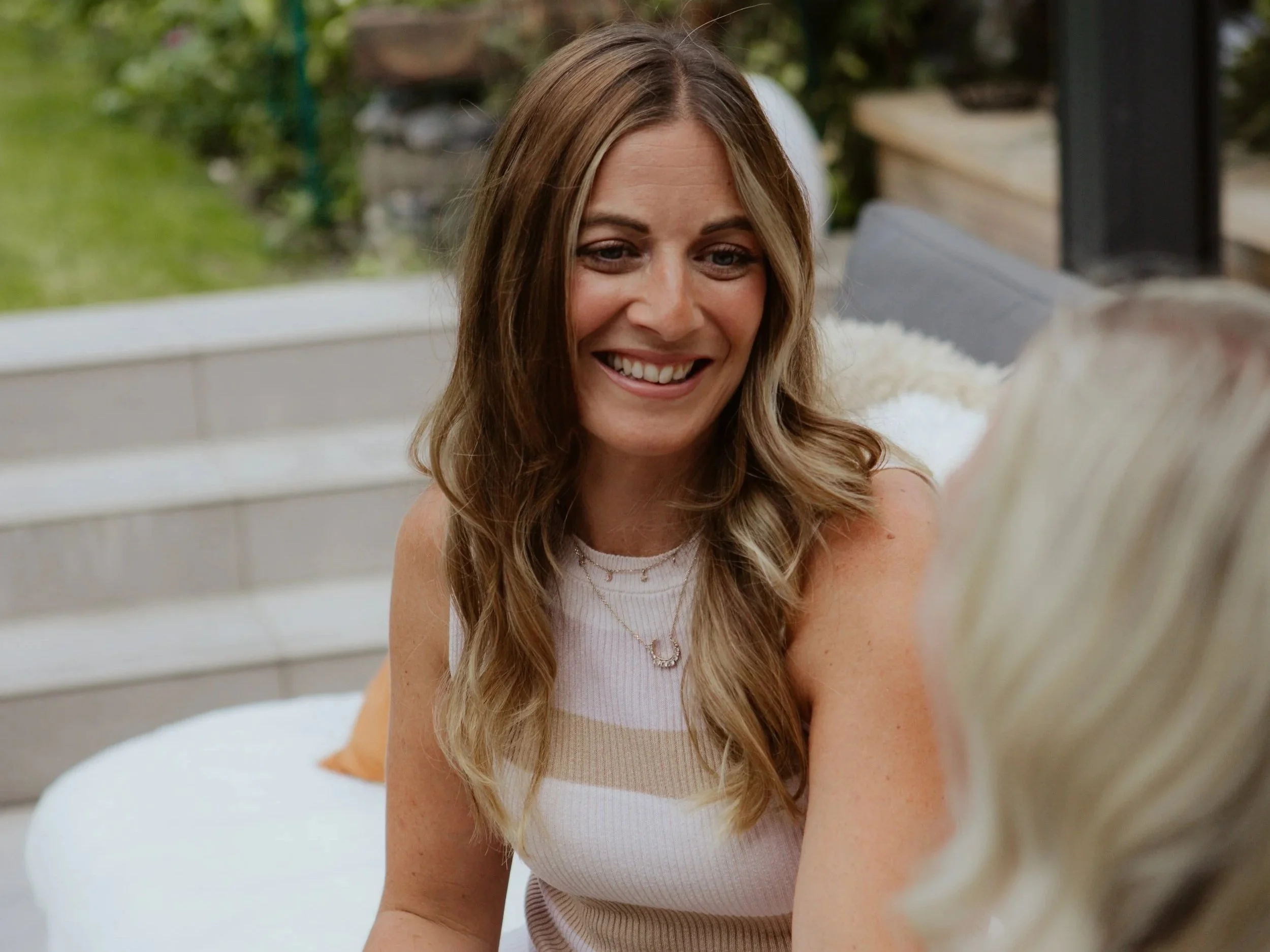
“Live will not always feel this difficult. Learning about your body and the nervous system gives you freedom and choice, and using tools as rituals helps support a slower, calmer way of living.”